
📅 China Public Holidays 2026 & 2027
Public Holidays 2026
| Date | Holiday | Type |
|---|---|---|
| 1 Jan 2026 · Thu | New Year's Day (元旦) | Public |
| 16 Feb 2026 · Mon | Chinese New Year (春节) | Public |
| 17 Feb 2026 · Tue | Chinese New Year (春节(初二)) | Public |
| 18 Feb 2026 · Wed | Chinese New Year (春节(初三)) | Public |
| 5 Apr 2026 · Sun | Qingming Festival (清明节) | Public |
| 1 May 2026 · Fri | Labour Day (劳动节) | Public |
| 19 Jun 2026 · Fri | Dragon Boat Festival (端午节) | Public |
| 25 Sep 2026 · Fri | Mid-Autumn Festival (中秋节) | Public |
| 1 Oct 2026 · Thu | National Day (国庆节) | Public |
| 2 Oct 2026 · Fri | National Day (国庆节) | Public |
| 3 Oct 2026 · Sat | National Day (国庆节) | Public |
Public Holidays 2027
Provisional — most countries publish the official calendar late in the year.
| Date | Holiday | Type |
|---|---|---|
| 1 Jan 2027 · Fri | New Year's Day (元旦) | Public |
| 6 Feb 2027 · Sat | Chinese New Year (春节) | Public |
| 7 Feb 2027 · Sun | Chinese New Year (春节(初二)) | Public |
| 8 Feb 2027 · Mon | Chinese New Year (春节(初三)) | Public |
| 5 Apr 2027 · Mon | Qingming Festival (清明节) | Public |
| 1 May 2027 · Sat | Labour Day (劳动节) | Public |
| 9 Jun 2027 · Wed | Dragon Boat Festival (端午节) | Public |
| 15 Sep 2027 · Wed | Mid-Autumn Festival (中秋节) | Public |
| 1 Oct 2027 · Fri | National Day (国庆节) | Public |
| 2 Oct 2027 · Sat | National Day (国庆节) | Public |
| 3 Oct 2027 · Sun | National Day (国庆节) | Public |
ℹ️ Why these dates matter
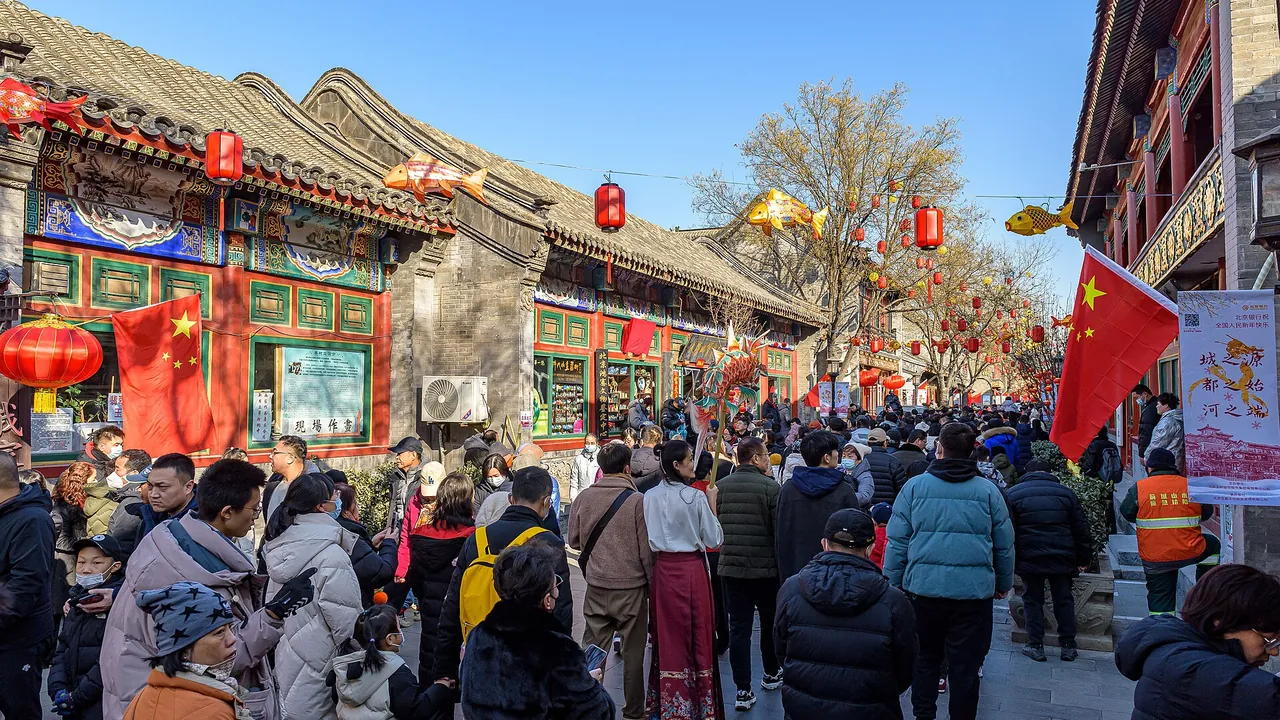
China publishes its holiday calendar once a year, and the small number of statutory days is always padded out by swapping in adjacent weekends to make a three- to eight-day break. That is why every major Chinese holiday produces the same effect: hundreds of millions of people travelling within a few days, and famous sights at three times their normal volume. Museums, banks and government offices keep their own hours during these breaks, while shops, restaurants and most attractions stay open. Plan your route around the dates below, then treat the Golden Weeks as a scheduling problem rather than a chance to tick off Beijing and Shanghai.

Festivals Worth Planning a Trip Around
Beyond the stat holidays — the events that define the travel year.
Chinese New Year — 16–18 February 2026 (Mon–Wed); Lunar New Year falls Tue 17 February
Spring Festival is the largest annual migration on earth: trains home sell out in minutes and the days either side of the holiday are the hardest tickets of the year. Cities empty out and neighbourhood businesses shut for a week or more, while temple fairs, lantern displays and firecracker displays take over. Travel after the holiday rather than before it, and expect smaller family restaurants to close for several days.
Water Splashing Festival — Around 13–15 April 2026 (Mon–Wed), Xishuangbanna Dai New Year
The Dai New Year in Xishuangbanna is three days of being soaked by everyone you pass, which is a blessing rather than an insult. Jinghong is the base, with street parades, dragon boat races on the Lancang river and Dai temple ceremonies in the villages around town. It is a local holiday rather than a national one, so flights and hotels into Jinghong sell out weeks ahead.
Dragon Boat Festival — 19 June 2026 (Fri)
Dragon Boat Festival brings drummers and crews racing long canoes with painted dragon heads, plus sticky zongzi parcels wrapped in bamboo leaf everywhere you look. The best racing is usually around Hong Kong, Guangdong and the old canal towns near Shanghai such as Hangzhou and Wuzhen. It is a three-day break in most years, so boat-and-guide packages disappear early.
Golden Week — May Day holiday 1 May 2026 (Fri); National Day week 1–3 October 2026 (Thu–Sat)
China has two Golden Weeks: the May Day break around 1 May, and the National Day break beginning 1 October, when attractions nationwide run at several times normal volume. Book flights 30 to 60 days out and hotels three to four weeks ahead, then travel on the second or third day rather than the first. Skip Beijing, Shanghai and Xi’an for those dates and go to secondary cities instead.
💡 Quick Tips
- Buy intercity train tickets the moment the booking window opens; for popular festival routes they can go within minutes.
- Book flights 30 to 60 days ahead for either Golden Week, and hotels three to four weeks out.
- Avoid travelling on the first and the last day of any Golden Week, when stations and airports are at their worst.
- Museums usually close on Mondays in China but often stay open through holidays, so check each site individually.
⚡ Pro Tips
- If you cannot avoid a Golden Week, spend it in one place rather than moving cities every day; the transport is the hard part, not the sights.
- Book trains before you book hotels, then build the itinerary around the tickets you actually got.
- Go to secondary cities such as Zhangjiajie, Guilin or Qingdao during peak weeks; the sights are comparable and the crowds much smaller.
📋 Summary
Every statutory public holiday in China for 2026 and 2027, plus the festivals worth planning around: Spring Festival, the Dai Water Splashing Festival in Xishuangbanna, Dragon Boat races and the two Golden Weeks. With practical advice on beating the crowds when hundreds of millions of people travel at once.
Frequently Asked Questions
Are attractions and restaurants open during Chinese holidays?
Most tourist attractions, restaurants and shopping streets stay open through the holidays and often extend their hours, because that is when business is best. Government offices, banks and many museums follow their own calendars, so check before you go. Around Spring Festival itself, small family-run places may shut for several days.
How early should I book trains for a Chinese Golden Week?
Buy them the day the booking window opens, because tickets on the busiest intercity routes are taken within minutes. Chinese railways release seats a limited number of days before departure, so check the exact window for your train. Flights can be booked much earlier, around 30 to 60 days out.
Where should I go in China to avoid Golden Week crowds?
Head for secondary cities and the regions beyond the Beijing-Shanghai-Xi’an triangle, such as Guilin, Zhangjiajie, Yunnan or Fujian. Even during peak weeks a second-tier city stays manageable if you start early in the morning. Avoid the headline sights entirely on the first and last day of the break.


